 |
|
 |
Video Endoscopic Sequence 1 of 2.
Early Gastric Cancer
This is a case of a 72 year-old lady that underwent an upper endoscopy due to Epigastric Pain.
The definition of early gastric cancer is that of a cancer in which tumor invasion is confined to the mucosa or submucosa regardless of the presence of lymph node metastasis.

PubMedncer is the fifth most common cancer in Europe with 159 900 new cases and 118 200 deaths reported in 2006.
Theuer CP, de Virgilio C, Keese G, French S, Arnell T, Tolmos J, Klein S, Powers W, Oh T, Stabile BE
Am J Surg. 1996 Nov; 172(5):473-6; discussion 476-7.
[PubMed] [Ref list]
For more endoscopic details download the video clips by
clicking on the endoscopic images, wait to be downloaded
complete then press Alt and Enter that you can appreciate
the video in full screen.
All endoscopic images shown in this Atlas contain
video clips. We recommend seeing the video clips in full
screen mode.
|
|
 |
Video Endoscopic Sequence 2 of 2.
Endoscopy of Early Gastric Cancer
Early gastric cancer is defined as remaining confined to the mucosa or submucosa, regardless of lymph node metastasis Japanese macroscopic classifications for gastric cancer are well known and divide early gastric cancer into three macroscopic types (0-I, 0-II, and 0-III) of which 0-II is then subclassified into 0-IIa, 0-IIb, and 0-IIc (The most common type of early gastric cancer is 0-IIc If two or more macroscopic types are mixed, the type that has spread further is recorded first. At an international workshop held in 2002, the Paris classification, which is based on the Japanese classification, was proposed and subsequently adopted as a simple and internationally unified classification for superficial gastrointestinal tumors.
|
|
 |
Video Endoscopic Sequence 1 of 3.
Small Gastric Cancer with Signet Ring Cells.
This is a 77 year-old female. Had presented with epigastralgia and nausea, At the endoscopy is found this small irregular lesion.
Biopsies reveal to be a cancer with Signet Ring Cells.
|
|
 |
Video Endoscopic Sequence 2 of 3.
Small Gastric Cancer with Signet Ring Cells.
|
|
 |
Video Endoscopic Sequence 3 of 3.
Small Gastric Cancer with Signet Ring Cells.
|
|
 |
Video Endoscopic Sequence 1 of 3.
Small Ulcerated Gastric Adenocarcinoma
Small irregular ulcerration at Prepyloric antrum
A 55-year-old male on a routine check-up endoscopy and colonoscopy is found this small irregular ulcer with high suspicion of cancer, the same day we performed the same studies to his wife.
Biopsies showed, Moderately differentiated adenocarcinoma.
|
|
 |
Video Endoscopic Sequence 2 of 3.
Small Ulcerated Gastric Adenocarcinoma
|
|
 |
Video Endoscopic Sequence 3 of 3.
Small Ulcerated Gastric Adenocarcinoma
|
|
 |
Video Endoscopic Sequence 1 of 4.
Small Gastric Cancer with Signet Ring Cells.
A 54-year-old female patient, who had had two previous endoscopies in less than a year, had not been detected this neoplasm, had been with strong epigastralgia, and as a family history of gastric cancer in several members of her family.
mach cancer is the fifth most common cancer in Europe with 159 900 new cases and 118 200 deaths reported in 2006.
Theuer CP, de Virgilio C, Keese G, French S, Arnell T, Tolmos J, Klein S, Powers W, Oh T, Stabile BE
Am J Surg. 1996 Nov; 172(5):473-6; discussion 476-7.
[PubMed] [Ref list]
|
|
 |
Video Endoscopic Sequence 2 of 4.
Small Gastric Adenocarcinoma with signet ring cellsancer is the fifth most common cancer in Europe with 159 900 new cases and 118 200 deaths reported in 2006. Theuer CP, de Virgilio C, Keese G, French S, Arnell T, Tolmos J, Klein S, Powers W, Oh T, Stabile BE
Am J Surg. 1996 Nov; 172(5):473-6; discussion 476-7.
[PubMed] [Ref list]
|
|
 |
Video Endoscopic Sequence 3 of 4.
Small Gastric Adenocarcinoma with signet ring cells |
|
 |
Video Endoscopic Sequence 4 of 4.
Small Gastric Adenocarcinoma with signet ring cells
|
|
 |
Video Endoscopic Sequence 1 of 4.
Gastric Adenocarcinoma of large size
This 63 year old lady presented with this mass at the corpus and gastric fundus.
 mach cancer is the fifth most common cancer in Europe with 159 900 new cases and 118 200 deaths reported in 2006.
Theuer CP, de Virgilio C, Keese G, French S, Arnell T, Tolmos J, Klein S, Powers W, Oh T, Stabile BE
Am J Surg. 1996 Nov; 172(5):473-6; discussion 476-7.
[PubMed] [Ref list]
|
|
 |
Video Endoscopic Sequence 2 of 4.
Gastric Adenocarcinoma of large size
An enormous mass is observed in the retroflexed maneuver
The most common type is Gastric Adenocarcinoma. It is actually the most common type of cancer (other than skin cancer) worldwide. Gastric Adenocarcinoma is more common in men, Asians, Africans, and Hispanics. There is a very high incidence in Japan, Chile, Colombia, and Central America. The second leading cause of stomach disease is non-Hodgkin's Lymphoma.
mach cancer is the fifth most common cancer in Europe with 159 900 new cases and 118 200 deaths reported in 2006.
Theuer CP, de Virgilio C, Keese G, French S, Arnell T, Tolmos J, Klein S, Powers W, Oh T, Stabile BE
Am J Surg. 1996 Nov; 172(5):473-6; discussion 476-7.
[PubMed] [Ref list]
|
|
 |
Video Endoscopic Sequence 3 of 4.
Endoscopic view of Gastric Cáncer
Gastric cancer remains a difficult disease to cure in Western countries, primarily because most patients present with advanced disease. Even patients who present in the most favorable condition and who undergo curative surgical resection often die of recurrent disease.
Gastric cancer is rare before the age of 40, but its incidence steadily climbs thereafter and peaks in the seventh decade of life.11 It is estimated that 876,340 cases of primary gastric cancer were diagnosed in 2000, accounting for nearly 650,000 deaths worldwide.4 In North America, the lifetime probabilities of developing and dying from gastric cancer are 1.5% and 1.0%, respectively.4 Overall, age-standardized mortality rates have decreased in females (9.9 to 4.2 per 100,000) and males (21.2 to 9.1 per 100,000) over the past 30 years in Canada.5 In the United States, there are 24,000 new cases and 14,000 deaths annually.12 In a retrospective study involving more than 50,000 patients treated for primary gastric cancer, Hundahl et al13 demonstrated that 65% of gastric cancers in the United States present at an advanced stage (T3/T4), with nearly 85% of tumors accompanied by lymph node metastasis at diagnosis. This problem is complicated further by a recurrence rate of 40% to 65% in patients resected with curative intent.14 In the absence of formal screening programs, most patients present with advanced pathologic stage and can expect a median survival of 24 months (20–30% 5-year survival) in tumors resected with curative intent, a median survival of 8.1 month after palliative procedures, and a median survival of only 5.4 months for advanced disease without an operation.
|
|
 |
Video Endoscopic Sequence 4 of 4.
Endoscopy of Gastric Adenocarcinoma of large size
The site of the cancer is classified on the basis of its relationship to the long axis of the stomach. Approximately 40% of cancers develop in the lower part, 40% in the middle part, and 15% in the upper part, and 10% involve more than one part of the organ. Over the past half century or so, there has been a steady decline in gastric cancer incidence and gastric cancer deaths in men and women in the United States. Most of this decrease has occurred in the intestinal type of gastric cancer. In addition, the incidence of gastric cardia adenocarcinoma has actually gradually increased.
|
|
 |
Video Endoscopic Sequence 1 of 5.
Endoscopy of Ulcerated Gastric Adenocarcinoma
This 82 year-old lady, presented this large and infiltrating
adenocarciona of the gastric antrum and corpus.
|
|
 |
Video Endoscopic Sequence 2 of 5.
Gastric carcinoma is the most common gastrointestinal malignancies worldwide.
Causes:
Several factors are implicated in the development of gastric cancer, including diet, Helicobacter pylori infection, previous gastric surgery, pernicious anemia, adenomatous polyps, chronic atrophic gastritis, prior radiation exposure or inherited syndromes. Gastric cancer may often be multifactorial involving both inherited predisposition and environmental factors.
|
|
 |
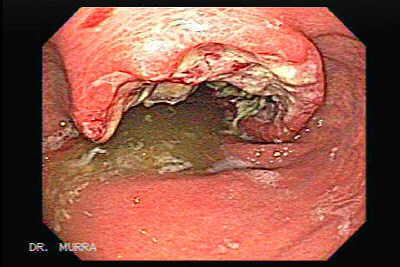
Video Endoscopic Sequence 3 of 5.
Causes.
Diet:
A diet rich in pickled vegetables, salted fish, excessive dietary salt, and smoked meats correlates with an increased incidence of gastric cancer.
A diet that includes fruits and vegetables rich in vitamin C may have a protective effect.
|
|
 |
Video Endoscopic Sequence 4 of 5.
Endoscopic view of Gastric Cáncer
Causes
Smoking
Smoking is associated with an increased incidence of stomach cancer in a dose-dependent manner, both for number of cigarettes and duration of smoking.
Smoking increases the risk of cardiac and noncardiac forms of stomach cancer. Cessation of smoking reduces the risk.
A meta-analysis of 40 studies estimated that the risk was increased by approximately 1.5- to 1.6-fold and was higher in men.
|
|
 |
Video Endoscopic Sequence 5 of 5.
Endoscopic view of Gastric Cáncer
Helicobacter pylori infection
Chronic bacterial infection with H pylori is the strongest risk factor for stomach cancer.
H pylori may infect 50% of the world's population, but much less than 5% of infected individuals develop cancer. It may be that only a particular strain of H pylori, one of which is capable of producing the greatest amount of inflammation, is especially associated with the risk of malignancy. The full malignant transformation of affected parts of the stomach may require that the human host have a particular genotype of interleukin-Iβ to cause the increased inflammation and an increased suppression of gastric acid secretion.
H pylori infection is associated with chronic atrophic gastritis, and patients with a history of prolonged gastritis have a 6-fold increase in their risk of developing gastric cancer. Interestingly, this association is particularly strong for tumors located in the antrum, body, and fundus of the stomach but does not seem to hold for tumors originating in the cardia.
Previous gastric surgery
Previous surgery is implicated as a risk factor. The rationale is that surgery alters the normal pH of the stomach, which may in turn lead to metaplastic and dysplastic changes in luminal cells.
Retrospective studies demonstrate that a small percentage of patients who undergo gastric polyp removal have evidence of invasive carcinoma within the polyp. This discovery has led some researchers to conclude that polyps might represent premalignant conditions.
|
|
 |
Video Endoscopic Sequence 1 of 6.
Ulcerated Gastric Adenocarcinoma with Signet Ring Cells.
This 47 year-old male, presented with weight loss of 50 pounds with no prior gastrointestinal symptoms, has a ulcerated gastric adenocarcinoma, immediately after the gastroesophagic junction.
Gastric carcinoma is a common malignancy in El Salvador and is one of the leading causes of morbidity and mortality.
|
|
 |
Video Endoscopic Sequence 2 of 6.
Endoscopic view of Gastric Cáncer
Extending from the GE junction along the lesser curve and posteriorly was a poorly defined non-ulcerative irregular mucosa. This measured approximately 2 x 3 cm.
|
|
 |
Video Endoscopic Sequence 3 of 6.
Endoscopic view of Gastric Cáncer
Gastric cancer remains a difficult disease to cure in Western countries, primarily because most patients present with advanced disease. Even patients who present in the most favorable condition and who undergo curative surgical resection often die of recurrent disease.
|
|
 |
Video Endoscopic Sequence 4 of 6.
Endoscopic view of Gastric Cáncer
The narrow band imaging (NBI) system consists of a sequential electronic endoscope system and a source of light equipped with new narrow band filters, yielding very clear images of microvessels on mucosal surfaces.
|
|
 |
Video Endoscopic Sequence 5 of 6.
Endoscopic view of Gastric Cancer
A newly developed narrow-band imaging (NBI) system, which uses modified optical filters, can yield clear images of microvessels and surface structure in gastric and colonic diseases. |
|
 |
Video Endoscopic Sequence 6 of 6.
Endoscopic view of Gastric Cancer
NBI displays enhanced images of capillaries in the mucosal surface and detailed mucosal texture by irradiating two narrow wave bands (390–445 nm/530–550 nm) which are strongly absorbed by circulating hemoglobin. If signal processing is performed using a pseudo-narrow band image, the state of mucosa tissues and observation conditions influence the results and good effects cannot be obtained. However, with NBI, the wavelength of the irradiating light itself is altered, and capillaries in the mucosal surface and detailed mucosal texture can thus be processed effectively and stably.
|
|
 |
Video Endoscopic Sequence 1 of 6.
Ulcerated Gastric Adenocarcinoma at the distal body.
This 67 year-old female presented with anorexia and weight loss of 10 pounds.
The images as well as the video clips display a small size neoplasia at the greater curvature in the distal body and posterior wall limiting with the antrum.
|
|
 |
Video Endoscopic Sequence 2 of 6.
Endoscopic view of Gastric Cancer
Most patients are elderly at diagnosis. The median age at diagnosis is 65 years (range 40-70 y). The gastric cancers that occur in younger patients may represent a more aggressive variant. |
|
 |
Video Endoscopic Sequence 3 of 6.
Endoscopic view of Gastric Cancer
Worldwide, stomach cancer (also referred to as gastric cancer) remains one of the most common forms of cancer, affecting approximately 800,000 new individuals annually. However, the rate of stomach cancer has been declining in the United States and western Europe over the past half-century, a trend which has been felt attributable in large part to changes in diet during this period of time. Interestingly, the incidence of cancers located in different portions of the stomach appear to be heading in opposite directions: while those located in the more distal (lower) portion of the stomach have been declining in incidence, there has actually been an increase in cases occurring in the proximal portion of the stomach (closer to the esophagus) and at the gastroesophageal junction.
|
|
 |
Video Endoscopic Sequence 4 of 6.
Endoscopic view of Gastric Cancer
Chromoscopy with indigo carmine.
The image shown here, is in the limit with the neoplasia, biopsies reveled intestinal metaplasia.
|
|
 |
Video Endoscopic Sequence 5 of 6.
Endoscopic view of Gastric Cancer
Chromoscopy with lugol´s.
|
|
 |
Video Endoscopic Sequence 6 of 6.
Endoscopic view of Gastric Cancer
Retroflexed Image.
|
|
 |
Video Endoscopic Sequence 1 of 5.
Extensive Gastric Adenocarcinoma
This 56 year old lady, two months previously initiate with abdominal pain, nausea, early satiety and postprandial vomiting and weight loss. Endoscopy demonstrated this large lesion.
|
|
 |
Video Endoscopic Sequence 2 of 5.
Endoscopic view of Gastric Cancer
Endoscopy revealed adenocarcinoma, seen here from the antrum. The tumor extended into the lesser curvature near of the gastric fundus.
|
|
 |
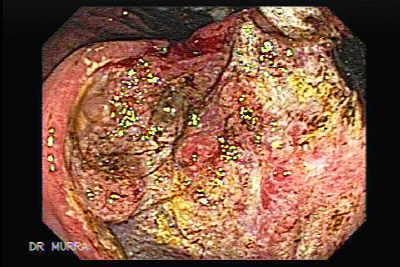
Video Endoscopic Sequence 3 of 5.
Endoscopic view of Gastric Cancer
Although the incidence of stomach cancer has declined dramatically in the United States and Western Europe in the last 50 years, the disease remains a serious problem in much of the rest of the world, where it's a leading cause of cancer death.
|
|
 |
Video Endoscopic Sequence 4 of 5.
Endoscopic Image of Gastric Cancer
This global variation is almost certainly linked to two factors that play a major role in the development of stomach cancer: Infection with Helicobacter pylori (H. pylori) bacteria and the type of diet.
|
|
 |
Video Endoscopic Sequence 5 of 5.
Endoscopic view of Gastric Cancer
Stomach cancer is more readily treated when caught early. Unfortunately, by the time it causes symptoms, the disease is often at an advanced stage and may have spread beyond the stomach. Yet there is encouraging news. You can reduce your risk of this serious cancer by making a few changes in your lifestyle.
|
|
 |
Video Endoscopic Sequence 1 of 3.
Gastric Adenocarcinoma of the Lesser Curvature.
This 83 year-old female, with no prior gastrointestinal symptoms, presented with one week of epigastric pain and one month of weight loss of more than 20 pounds.
Worldwide, gastric carcinoma is the most common cancer after lung cancer and a major cause of mortality and morbidity
|
|
 |
Video Endoscopic Sequence 2 of 3.
Gastric Adenocarcinoma of the Lesser Curvature.
Enormous malign ulceration is seen.
Advanced lesions have already invaded the muscularis propria. They are associated with metastases to regional lymph nodes or to local or distant structures.
Early gastric lesions are confined to the mucosa or submucosa. Most reports are from Japan, as a result of mass screening there.Patients with these tumors have a 5-year survival rate of 90%.
|
|
 |
Video Endoscopic Sequence 3 of 3.
Gastric Adenocarcinoma.
Pathophysiology: The accepted pathway involves transitions from gastritis to gastric atrophy to metaplasia to dysplasia and, finally, to cancer.
Several dietary and environmental factors may influence this pathway.
Hypochlorhydria: This condition occurs in gastric atrophy and promotes bacterial colonization of the stomach. It leads to increased nitrite formation, which may have a mutagenic effect on the atrophic gastric mucosa.
Helicobacter pylori: Antral gastritis caused by H pylori has been linked to the development of gastric cancer. Patients with H pylori gastritis are 3-6 times more likely to develop gastric cancer than individuals without the infection.
Certain foods: Starch, pickled vegetables, salted fish and meat, smoked foods, and salt have all been implicated.
Cigarette smoking: Those who smoke more than 30 cigarettes per day have a 5-fold increased risk of gastric carcinoma.
|
|
 |
Video Endoscopic Sequence 1 of 3.
Endoscopic view of Gastric Cancer
Gastric Adenocarcinoma with extensive duodenal infiltration.
This 69 year old male, presented with loss of weight more than 20 pounds and severe abdominal pain with a nocturnal predominance
|
|
 |
Video Endoscopic Sequence 2 of 3.
Endoscopic view of Gastric Cancer
This image displays the pylorus and the duodenal bulb that be infiltrated by the tumor.
|
|
 |
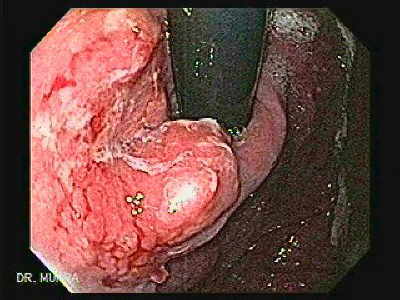
Video Endoscopic Sequence 3 of 3.
Extensive infiltration into the duodenal bulb.
Biopsies proven to be a gastric adenocarcinoma of the antrum with duodenal infiltration.
|
|
 |
Endoscopic Sequence 1 of 4.
Gastric Adenocarcinoma of the Gastric Cardias.
A 74 year-old female with abdominal pain and nauseas. The an upper gastroscopy displays a nodular and ulcerated small mass at the gastric cardias.
Esophageal cancer and cancer of the gastric cardia, in
particular adenocarcinomas, have shown a rapid and largely
unexplained increase in incidence in many developed
countries around the world. These diseases have a poor
prognosis and current therapies have a modest impact on
survival. Tytgat GN, Bartelink H, Bernards R, Giaccone G, van Lanschot
JJ, Offerhaus GJ, Peters GJ. Cancer of the esophagus and gastric cardia:
recent advances.
|
|
 |
Video Endoscopic Sequence 2 of 4.
Endoscopic view of Gastric Cancer
Another image and video of that small neoplasia, however The cat scan displays that the liver is infiltrated with metastases.
CT is primarily used to preoperatively assess patients with gastric carcinoma. CT is to assess the presence and extent of extragastric spread. This information is vital in deciding between palliative surgery and curative radical surgery. Therefore, the main role of CT is to identify patients who would not benefit from radical surgery. Thus, CT is used to stage the tumor and also to monitor the response to treatment.
|
|
 |
Video Endoscopic Sequence 3 of 4.
This image and the video was taken with magnifying endoscope. Irregular texture is observed. Some areas are ulcerated.
|
|
|
 |
Video Endoscopic Sequence 4 of 4.
Endoscopic view of Gastric Cancer
This magnifying image displays a tiny irregular ulcer.
|
|
 |
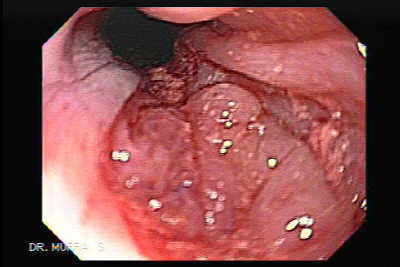
Endoscopic Sequence 1 of 2.
Endoscopic view of Gastric Cancer
This 84 year-old male, presented with dysphagia and weight lost. |
|
 |
Endoscopic Sequence 2 of 2.
Endoscopic view of Gastric Cáncer
The esophageal cardias is infiltrated. |
|
 |
Endoscopic Sequence 1 of 3.
Endoscopic view of Gastric Cáncer
Adenocarcinoma of the lower third of the esophagus and fornix.
This 72 year-old male was referred to our endoscopic unit for evaluation of dysphagia for solid and liquids.
|
|
 |
Endoscopic Sequence 2 of 3.
Endoscopic Image of Gastric Cáncer
The rutinary biopsies are taken for the diagnosis.
|
|
 |
Endoscopic Sequence 3 of 3.
Endoscopic view of Gastric Cáncer
The gastric fornix is infiltrated with this large mass.
|
|
 |
Video Endoscopic Sequence 1 of 18.
Diffuse Gastric Adenocarcinoma with signet ring cells.
This 44 year-old woman had been suffering of epigastric pain since 2 months previously with nauseas and some occasion vomiting, at endoscopy a large smooth ulcer was found at the retroflexed some rigidity was feel.
|
|
 |
Video Endoscopic Sequence 2 of 18.
Endoscopic Image of Diffuse Gastric Adenocarcinoma with signet ring cells.
Large Ulcer with smooth surface is observed at the retroflexed maneuver some stiffness are noted.
|
|
 |
Video Endoscopic Sequence 3 of 18.
Biopsies in different quadrants are taken, is observed some rigidity and thickening around the ulcer.
Scirrhous carcinomas typically cause irregular narrowing and rigidity of the stomach, giving rise to the typical linitis plastica, or "leather bottle" appearance. Although some are lobulated lesions in the fundus or body, others consist of thickened, irregular mucosal folds and nodularity without significant narrowing.
|
|
 |
Video Endoscopic Sequence 4 of 18.
Macrocospic specimen of Diffuse Gastric Adenocarcinoma with signet ring cells..
Great size and deep ulcer is observed with irregular folds.
Click Here to enlarge this picture. |
|
 |
Video Endoscopic Sequence 5 of 18.
Diffuse Gastric Adenocarcinoma with signet ring cells.
Another macroscopic aspect
Linitis plastica refers to the diffuse proliferation of the connective tissue, resulting in tissue thickening so that the stomach is constricted and rigid. Pathological exams reported a strong connective stroma-reaction associated with a malignant glandular proliferation of independent cells (signet-ring cells), invading all the layers of the digestive tract.
Click on the image to enlarge
|
|
 |
Video Endoscopic Sequence 6 of 18.
Macroscopic view of the stomach at the surgery, the lesion is infiltrating the serosa.
Click here to enlarge this picture.
|
|
 |
ideo Endoscopic Sequence 7 of 18.
Gastric Adenocarcinoma
Macroscopic detail of the neoplasia.
|
|
 |
Video Endoscopic Sequence 8 of 18.
Gastric Adenocarcinoma
ALTHOUGH GASTRIC CARCINOMA occurs with reduced frequency, it is still a prevalent disease. Most gastric carcinomas are classified as adenocarcinomas due to glandular growth pattern and/or presumed occurrence of mucin intracellularly Mucin is often identified by periodic acid-Schiff (PAS) and/or alcian blue (AB) positivity. However, neither of these histochemical methods is specific for mucins. Both methods are based upon the identification of glycoproteins. We have previously described that a proportion of gastric carcinomas, particularly of the diffuse type according to Laurén 1965 are neuroendocrine derived and probably of enterochromaffin-like (ECL) cell origin. The so-called signet ring cell carcinomas belong to the diffuse type of gastric carcinomas. |
|
 |
Video Endoscopic Sequence 9 of 18.
Irregular infiltration is observed, penetration of the tumor through the serosa.
|
|
 |
Video Endoscopic Sequence 10 of 18.
Gastric Adenocarcinoma
Gastric linitis plastica is a very particular malignant gastrictumor different from the usual gastric adenocarcinoma. Linitis plastica refers to the diffuse proliferation of the connective tissue, resulting in tissue thickening so that the stomach is constricted and rigid. Pathological exams reported a strong connective stroma-reaction associated with a malignant glandular proliferation of independent cells (signet-ring cells), invading all the layers of the digestive tract, the mucosa being usually save not affected. Diagnosis is based on the association of pathological results findings revealed by endoscopic, endoscopic ultrasonography, radiological and surgical examinations. Opposed to the adenocarcinoma, Helicobacter Pylori seems not to be associated with the occurrence of gastric linitis.
|
|
 |
Video Endoscopic Sequence 11 of 18.
Gastric Adenocarcinoma
In this photography the diffuse thickening of the tumor around the ulcer with extension in the form of arm is observed.
Click on the image to enlarge
|
|
 |
Video Endoscopic Sequence 12 of 18.
Gastric Adenocarcinoma
Diet appears to play a major role in the development of stomach cancer. Nitroso compounds such as nitrites (found in smoked meats and fish) and nitrates (used in food preservatives), and high salt intake, likely contribute to this disease, whereas fresh vegetables are protective. The question of whether green tea also has any protective effects remains debatable.
Click on the image to enlarge
|
|
 |
Video Endoscopic Sequence 13 of 18.
A bacteria called Helicobacter pylori represents an additional risk factor for gastric cancer, particularly those cancers occurring in the distal portion (antrum) of the stomach. This infection may lead to inflammation of the superficial layer of the stomach, inducing changes in the cells that line the stomach which eventually results in cancer. It should be stressed, however, that most patients with H. pylori infection do not develop gastric cancer. The independent association between peptic ulcer disease (PUD) and stomach cancer remains questionable, although H. pylori infection is known to be a risk factor for both. Autoimmune gastritis (associated with lack of hydrochloric acid secretion in the stomach and pernicious anemia), and adenomatous gastric polyps, represent other precursors that increase a person's risk of developing stomach cancer. Chronic GERD (gastroesophageal reflux disease) can cause damage to the tissue lining the lower portion of the esophagus and first portion of the stomach (cardia), resulting in the development of cancer at the G-E junction.
|
|
 |
Video Endoscopic Sequence 14 of 18.
Gastric Adenocarcinoma
Gastric adenocarcinoma may spread via direct extension through the stomach wall into adjacent organs (spleen, pancreas, colon, esophagus, diaphragm). Alternatively, cancer cells may spread through lymphatic channels to lymph nodes in the abdomen or chest, and even rarely to the left supraclavicular (neck) lymph nodes. Metastases through the bloodstream can result in the cancer spreading to distant organs such as liver, lungs, and bones. Direct peritoneal seeding can produce malignant ascites (fluid accumulation in the abdomen). In women, stomach cancer can spread to the ovaries, referred to as a Krukenberg tumor.
Click on the image to enlarge
|
|
 |
Video Endoscopic Sequence 15 of 18.
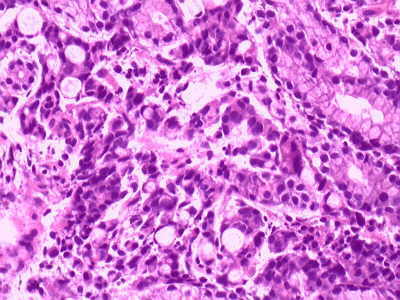
Endoscopic biopsy at high power showing the undifferentiated signet ring cells of the ulcer.
Finally, gastric cancers are seen at increased frequency in certain familial cancer syndromes, such as hereditary non-polyposis colon cancer (HNPCC) and the E-cadherin familial stomach cancer syndrome (associated with the diffuse form of stomach cancer).
Click on the image to enlarge
|
|
 |
Video Endoscopic Sequence 1 of 28.
Gastric Ulcerated Adenocarcinoma of the Pre-pyloric Antrum.
This 69 year-old female, 3 moths previous, presented gastroesophageal reflux disease weigh loss of 5 pounds, no nauseas as well as no vomiting was reported, an upper endoscopy was achived, showing this ulcerated an irregular mass. The patient underwent laparoscopic subtotal gastrectomy.
|
|
 |
Video Endoscopic Sequence 2 of 28.
Endoscopic Image of Gastric Cáncer
Gastric Ulcerated Adenocarcinoma of the Pre-pyloric Antrum.
|
|
 |
Video Endoscopic Sequence 3 of 28.
Gastric Ulcerated Adenocarcinoma of the Pre-pyloric Antrum.
|
|
 |
Video Endoscopic Sequence 4 of 28.
Gastric Ulcerated Adenocarcinoma of the Pre-pyloric Antrum.
Some peristaltic wave are observed.
|
|
 |
Video Endoscopic Sequence 5 of 28.
Laparoscopic Gastrectomy for Gastric Cancer
The patient underwent a laparoscopic subtotal gastrectomy with lymph node dissection.
Laparoscopic gastrectomy is becoming widely used for the
management of gastric cancer.
"treating patients with stomach cancer is to remove the
cancer completely and safely, while preserving his or her
quality of life"
|
|
 |
Video Endoscopic Sequence 6 of 28.
Laparoscopic Gastrectomy for Gastric Cancer
laparoscopic gastrectomy for gastric cancer has become
popular because of advances in surgical techniques.
|
|
 |
Video Endoscopic Sequence 7 of 28.
Laparoscopic Gastrectomy for Gastric Cancer
"Laparoscopic gastrectomy is a technically advanced
surgical procedure,"
A novel, minimally invasive surgical approach to treat
stomach cancer has been shown to have advantages that
may make it a preferable treatment for some patients.
|
|
 |
Video Endoscopic Sequence 8 of 28.
Laparoscopic Gastrectomy for Gastric Cancer.
|
|
 |
Video Endoscopic Sequence 9 of 28.
Laparoscopic Gastrectomy for Gastric Cancer.
|
|
 |
Video Endoscopic Sequence 10 of 28.
Laparoscopic Gastrectomy for Gastric Cancer.
|
|
 |
Video Endoscopic Sequence 11 of 28.
Laparoscopic Gastrectomy for Gastric Cancer
|
|
 |
Video Endoscopic Sequence 12 of 28.
Laparoscopic Gastrectomy for Gastric Cancer.
|
|
 |
Video Endoscopic Sequence 13 of 28.
Laparoscopic Gastrectomy for Gastric Cancer
|
|
 |
Video Endoscopic Sequence 14 of 28.
Laparoscopic Gastrectomy for Gastric Cancer.
|
|
 |
Video Endoscopic Sequence 15 of 28.
Extraction of the surgical specimen is achived through a small incision.
|
|
 |
Video Endoscopic Sequence 16 of 28.
The surgical specimen.
|
|
 |
Video Endoscopic Sequence 17 of 28.
The surgical specimen
|
|
 |
Video Endoscopic Sequence 18 of 28.
Press on images to enlarge
|
|
 |
Video Endoscopic Sequence 19 of 28.
Press on images to enlarge |
|
 |
Video Endoscopic Sequence 20 of 28.
|
|
 |
Video Endoscopic Sequence 21 of 28.
|
|
 |
Video Endoscopic Sequence 22 of 28.
Macroscopic view of a Gastric Cancer
The surgical specimen has been opened showing the antral tumor.
Press on images to enlarge
|
|
|
 |
Video Endoscopic Sequence 23 of 28.
Macroscopic view of a Gastric Cancer
A close up, Press on images to enlarge
|
|
 |
Video Endoscopic Sequence 24 of 28.
Press on images to enlarge
|
|
 |
Video Endoscopic Sequence 25 of 28.
Press on images to enlarge |
|
 |
Video Endoscopic Sequence 26 of 28.
Macroscopic view of a Gastric Cancer
Press on images to enlarge
|
|
 |
Video Endoscopic Sequence 27 of 28.
Macroscopic view of a Gastric Cancer
Press on images to enlarge
|
|
 |
Video Endoscopic Sequence 28 of 28.
Macroscopic view of a Gastric Cancer
Press on images to enlarge
|
|
 |
Video Endoscopic Sequence 1 of 10.
Ulcerated adenocarcinoma of the antrum with signet ring cells
This a 72 year-old male, who had a crisis of lipotimia, having ruled out cardiovascular and neurological disease by their respective medical specialists, comes to our unit to continue his checkup,, who 15 years ago underwent surgery due to an acute retrocecal appendicitis, 10 years previous a lymphoma of the spermatic cord was found, at the time, he denied to receive chemotherapy, he suffered from a lymphoma of the spermatic cord, subsequently received chemotherapy due to the spread of the lymphoma having achieved regression.
Reach our unit because of, he had suffered from fainting.
We practice a routine endoscopy because its latter, that I had practiced 21 years ago. He had not had dyspeptic symptoms. an upper endoscopy was performed finding this tumor apparently asymptomatic.
|
|
 |
Video Endoscopic Sequence 2 of 10.
Endoscopy of Ulcerated Gastric Cancer of the Antrum
Biopsies displays Signet ring cell carcinoma of the stomach
|
|
 |
Video Endoscopic Sequence 3 of 10.
Image and video clip of a Gastric Cancer
Approach to this neoplasm is observed. The respective biopsies are obtained.
|
|
|
 |
Video Endoscopic Sequence 4 of 10.
Gastric Carcinoma of the diffuse type.
Resection specimen Signet ring cell carcinoma of the stomach.
Press on images to enlarge
|
|
 |
Video Endoscopic Sequence 8 of 10.
A stomach ulcer that was diagnosed as cancer on biopsy and surgically removed.
Press on images to enlarge
|
|
 |
Secuencia Video Endoscópica 1 de 3.
Esophageal Varices and Gastric Cancer
This is a 80 year-old female with esophageal varices and gastric cancer of the antrum.
|
|
 |
Secuencia Video Endoscópica 2 de 3.
Image and Video clip of Esophageal Varices and Gastric Cancer
Biopsies revealed to be an intestinal adenocarcinoma
|
|
 |
Secuencia Video Endoscópica 3 de 3.
Image and Video clip of Esophageal Varices and Gastric Cancer.
|
|
|
|
|
|
|
|


